Technology is changing almost every part of modern life, and education is no exception.
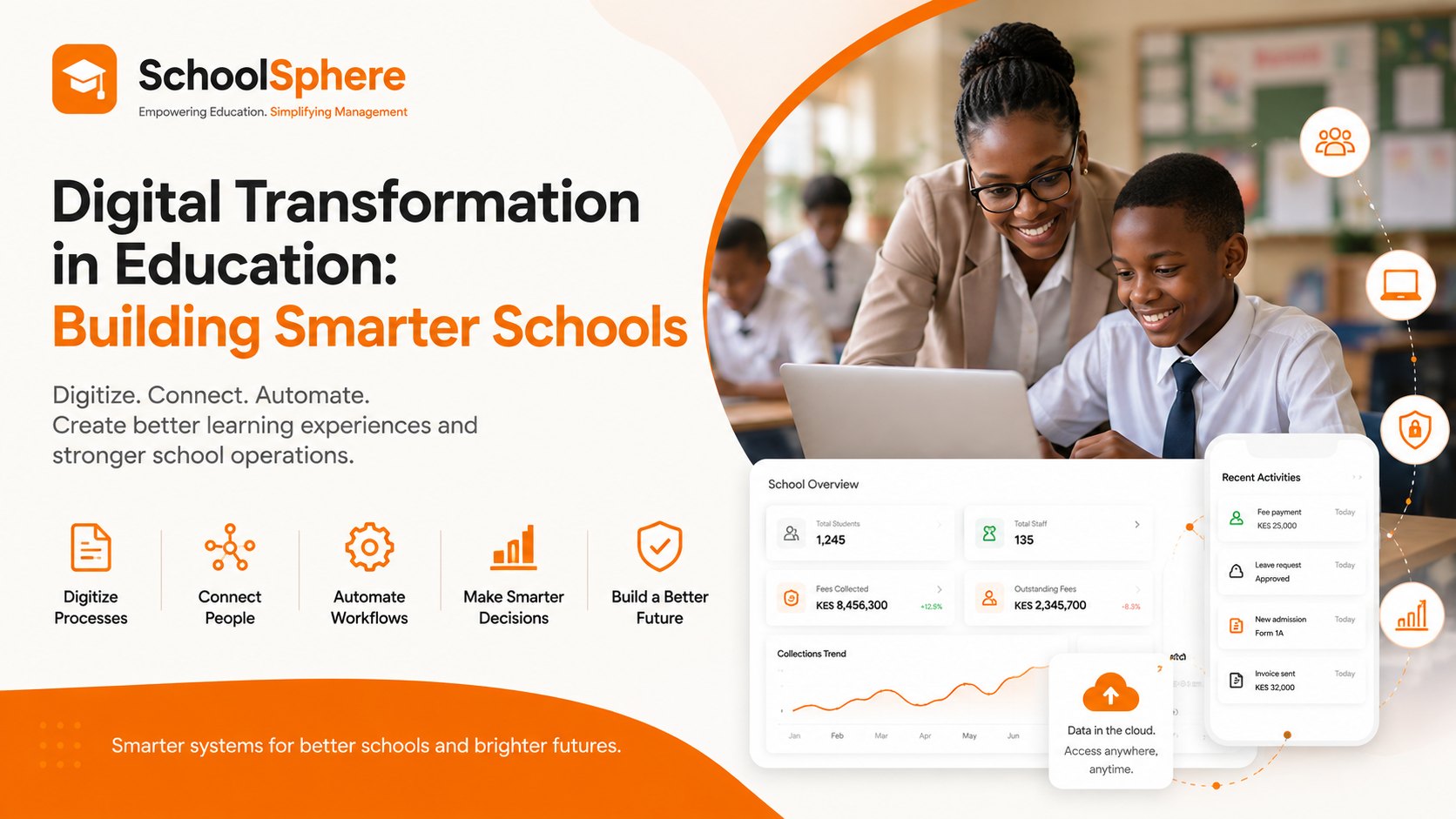
For schools, digital transformation is no longer simply about introducing computers into classrooms. It is about using technology to rethink how the entire institution operates—from administration and communication to finance, human resources, academics, and decision-making.
The schools that benefit most from digital transformation are those that look beyond individual technologies and focus on creating connected, efficient systems.
What does digital transformation mean for schools?
Digital transformation means using technology to improve the way a school works.
This can include replacing paper-based processes with digital workflows, automating repetitive tasks, connecting different departments, improving communication, and using data to make better decisions.
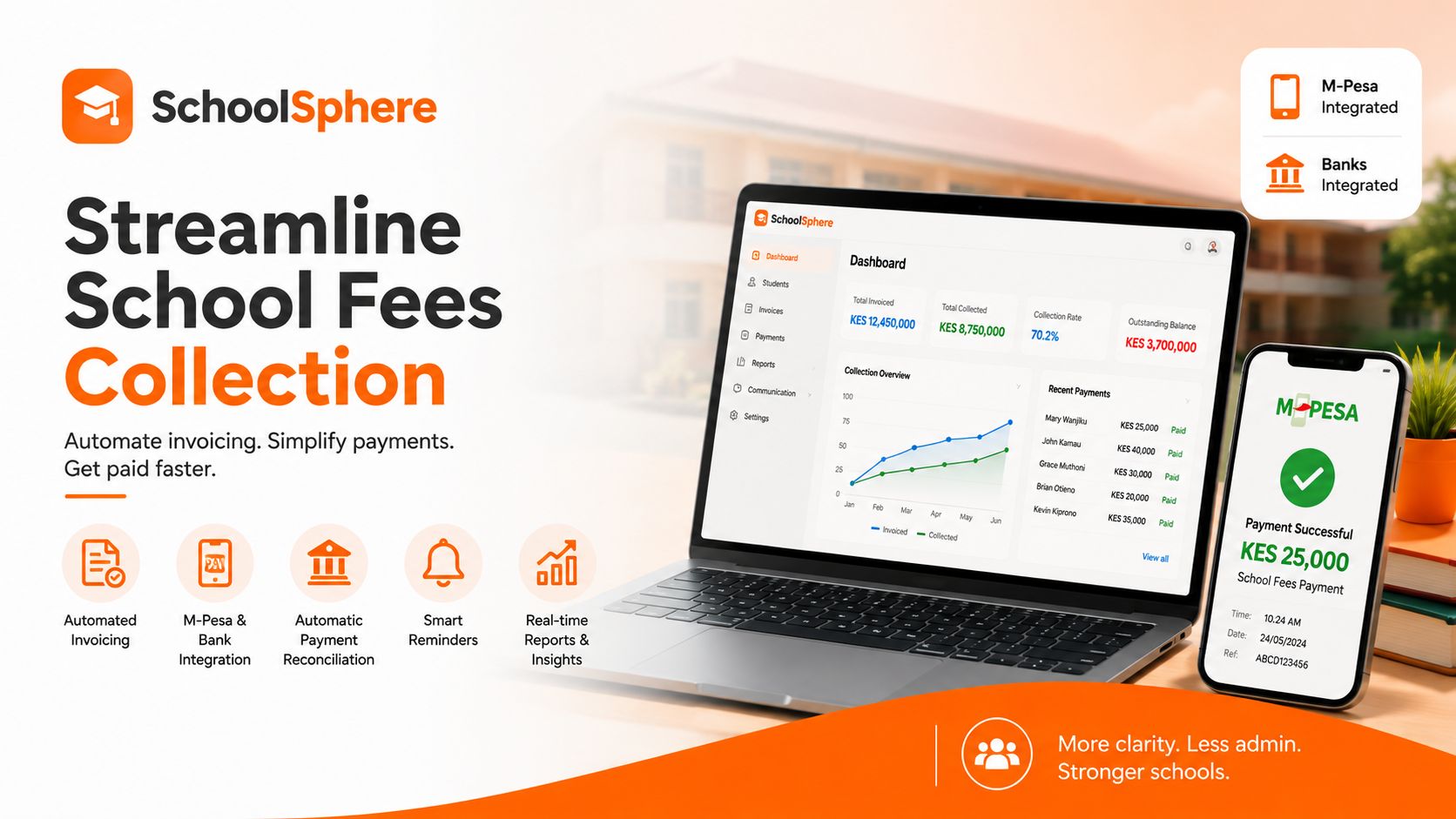
For example, instead of manually preparing fee invoices and then checking M-Pesa messages and bank statements to identify payments, a school can use an integrated system that connects invoicing and payment collection.
The technology becomes part of the school's workflow rather than an additional administrative burden.
1. Move from paper to digital processes
Paper records can be difficult to search, update, secure, and share.
Digital records make it easier for authorized staff to access information, update records, generate reports, and maintain consistent data.
Digitizing school processes can also reduce duplication and the amount of physical paperwork that administrative teams need to manage.
2. Connect different departments
One of the biggest opportunities presented by digital transformation is integration.
Finance, HR, academics, administration, communication, and student management should not have to operate as completely separate islands.
When systems are connected, information can move more efficiently between processes.
This creates a more complete view of the school and reduces the need to enter the same information repeatedly.
3. Automate repetitive tasks
Not every administrative task requires manual intervention.
Invoicing, payment reconciliation, reminders, leave tracking, reporting, and other repetitive processes can often be automated.
Automation doesn't remove the need for staff oversight. Instead, it allows staff to focus on tasks that require judgment, communication, and human interaction.
4. Use data to make better decisions
Digital systems generate useful information.
School leaders can use reports and dashboards to understand financial performance, student trends, staff information, attendance, and other operational indicators.
Instead of waiting until the end of a term to compile information manually, administrators can have access to more timely data.
This enables schools to identify problems earlier and make more informed decisions.
5. Strengthen communication
Digital transformation also changes how schools communicate.
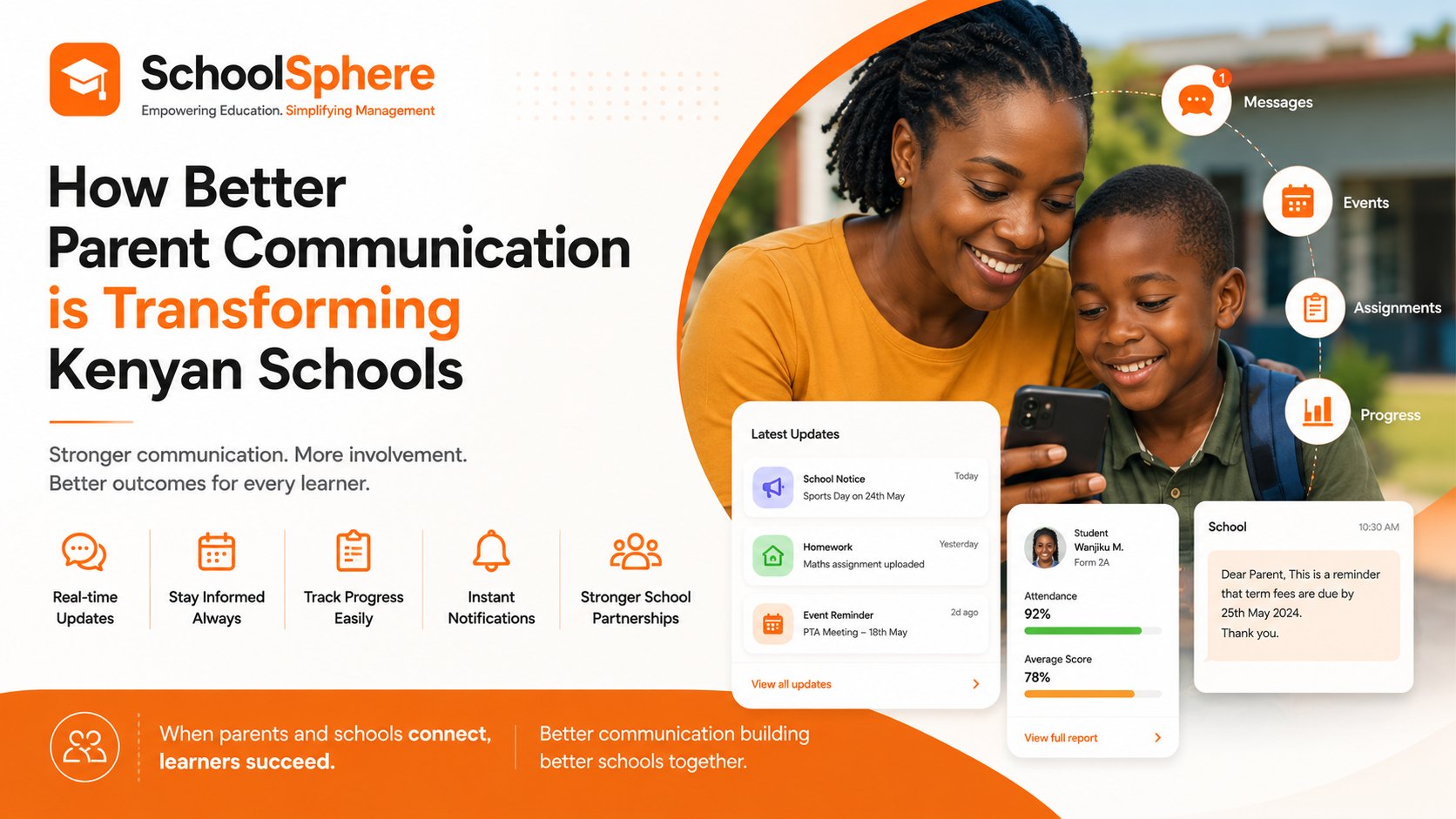
Parents increasingly expect timely updates and convenient access to information. Teachers and administrators need efficient ways to communicate with one another.
A connected digital platform can help schools improve communication while reducing the need to rely on fragmented channels and manual processes.
6. Improve the experience for teachers and administrators
Technology should make people's jobs easier.
If a new system simply adds another layer of complexity, it has failed its purpose.
Effective digital transformation reduces unnecessary administrative work, makes information easier to access, and simplifies everyday processes.
For teachers and administrators, this means spending less time searching for information and completing repetitive paperwork.
7. Build a foundation for future growth
Digital transformation is not a one-time project.
As technology evolves and schools grow, their systems need to evolve too.
A scalable school management platform gives schools a foundation they can build on as their requirements change.
The objective is not to adopt every new technology. It is to choose tools that solve real problems and create measurable value.
SchoolSphere and the digital transformation journey
SchoolSphere helps schools bring essential management processes together in one digital platform.
From student management and academics to finance, fee collection, HR, communication, and reporting, the platform is designed to reduce administrative complexity and improve visibility.
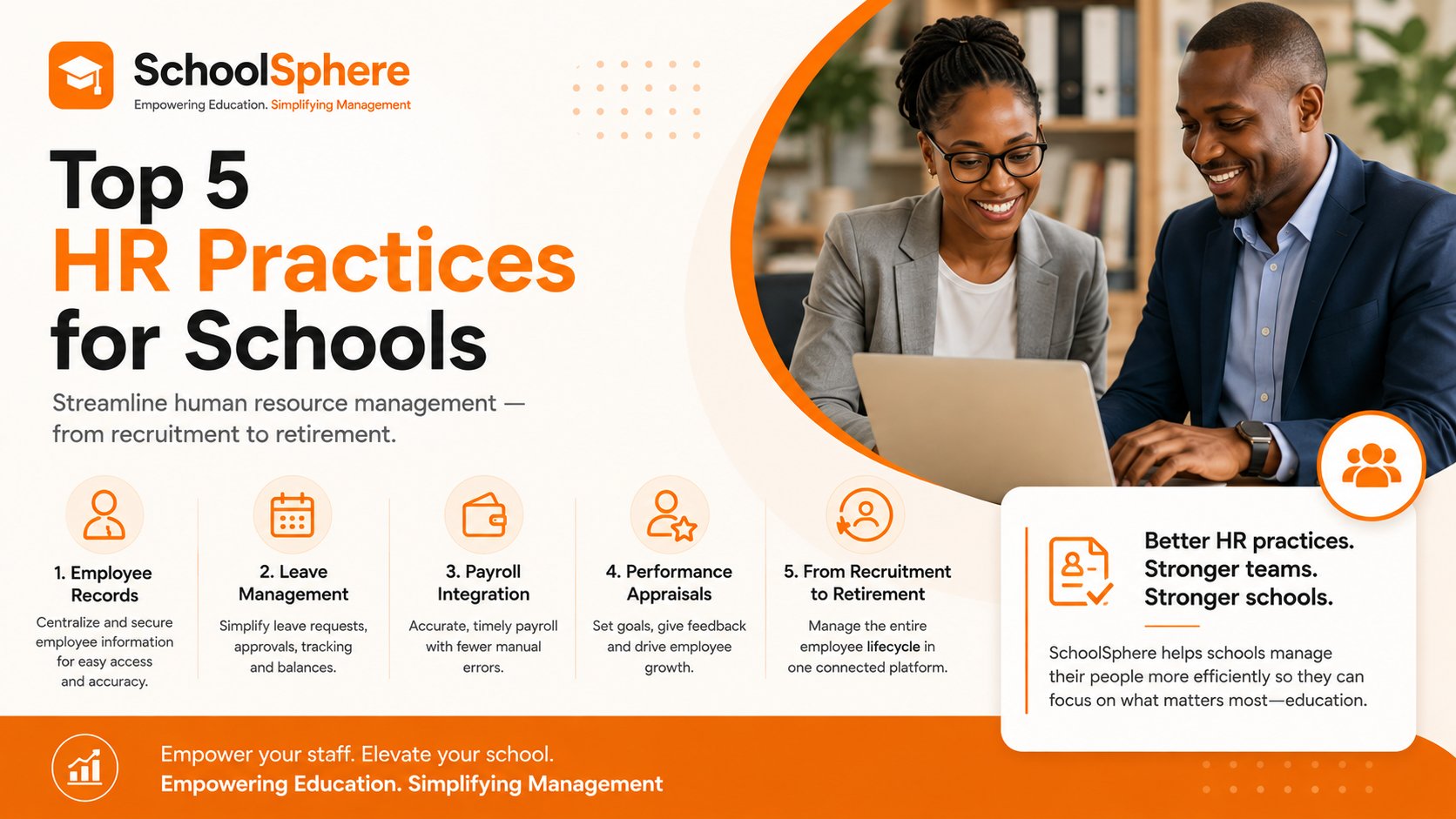
Its M-Pesa and bank integrations help streamline financial processes, while HR tools can support employee records, leave management, payroll integration, and performance appraisals.
By connecting these processes, schools can move away from fragmented administration toward a more integrated digital environment.
Technology should empower education
Digital transformation is ultimately not about technology for its own sake.
It is about giving schools better ways to operate.
When administrative processes become simpler, leaders gain better visibility, staff spend less time on repetitive work, and schools can focus more of their resources on teaching and learning.
The goal is a school that is more connected, more efficient, and better prepared for the future.
SchoolSphere — Empowering Education. Simplifying Management.